
Whoa! Okay, quick confession: I’ve tried more extension wallets than I care to admit. Really. Some of them felt clunky. Rabby, though—there was a moment where my gut said, « this one might stick. » My first impression was curiosity mixed with skepticism. Then I dug in and found smart design choices that matter for daily DeFi use, and some rough edges too.
Here’s the thing. Browser extension wallets are convenient and dangerous at the same time. They sit right in your browser, where phishing pages, malicious scripts, and accidental approvals can trample your assets if you’re not careful. So yeah—download decisions should be deliberate, not casual.
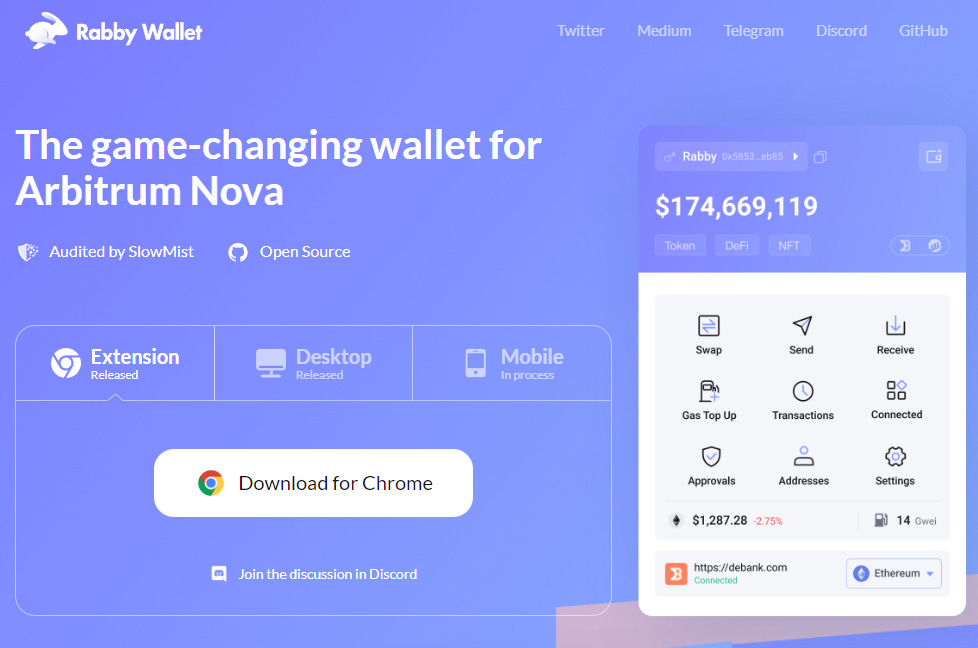
What Rabby Wallet Actually Is
Rabby is a browser extension wallet aimed at DeFi users who want more control than a basic wallet UI provides. It supports multiple accounts, network switching, hardware wallet integration (like Ledger), and features designed to reduce accidental approvals. On paper that sounds like every other wallet. In practice, some of those features feel thoughtfully implemented—especially around transaction previews and contract interaction warnings.
That said, I’m biased toward wallets that let me see what a transaction will call before I hit « confirm. » Rabby does that. It parses the contract call, shows the function and parameters, and gives you an option to reject with a single click. Small things, but they add up when you use DeFi daily.
How to Download and Install (Safe Steps)
Step-by-step, here’s a straight-forward approach to install Rabby without getting phished. Heads up—take each step slowly.
1. Go to a reputable source. I usually verify via the project’s official channels and GitHub release page. If you want a quick start, there’s a direct place to get the extension: rabby wallet. Verify the URL in your address bar; that little check saves headaches.
2. Install the extension from the browser store or the trusted release. After install, pin it to the toolbar so it’s easier to open and review requests. Don’t skip this—extensions hiding behind menus are easy to ignore, and ignoring approval windows is how mistakes happen.
3. Create a new wallet or import an existing one. If you create a new wallet, write down the seed phrase on paper. Not a screenshot. Not a cloud note. Paper. Repeat: paper.
4. Enable hardware wallet integration if you have one. Connecting a Ledger or similar device adds a strong protection layer for signing transactions. It changes the game for risk management.
Permissions, Approvals, and What to Watch For
Extensions ask for permissions. Some are benign. Some are shaped like a wolf in sheep’s clothing. Rabby requests typical extension permissions, but pay attention when sites ask for unlimited token approvals or contract permissions for huge allowances. Your instinct matters. If a dApp asks for an open-ended allowance, refuse and then set a small, specific approval amount instead.
On one hand, frequent approvals are annoying. On the other hand, blanket approvals are terrifying. So the compromise: approve sparingly and revoke allowances when a dApp no longer needs them. Rabby provides tools to review approvals; use them. Seriously.
Also, watch the network. I once accidentally approved a transaction on a testnet popup that looked like mainnet. Somethin’ about the URL and the chain ID didn’t match my brain’s expectations. Your eyes can catch that before you confirm—if you slow down.
Everyday Tips for Safer DeFi with a Browser Wallet
– Use multiple accounts. One for trading, another for long-term holdings. Isolation reduces blast radius when something goes wrong.
– Keep a small « hot » balance. Only what you’re ready to risk for the short term.
– Activate hardware signing for anything above pocket-change.
– Review transaction details: the function name, target contract, and parameter values. If any line looks odd, reject it.
– Regularly check approvals and revoke unnecessary allowances.
I’ll be honest: managing these habits is the difference between being an occasional user and being a careful DeFi citizen. It bugs me how many people skip these steps.
Advanced Features Worth Knowing
Rabby offers transaction simulation for some calls, a gas control UI, and clearer contract-reading tools than many extensions. These help you avoid surprises—like an approval that transfers all of your tokens. The wallet also supports « approve-to-spend » monitoring so you can see and act on risky allowances quickly. On the flip side, advanced features mean more UI to learn; there’s a small learning curve.
If you use Ledger, check firmware compatibility and confirm contracts on the device screen. If you ignore that step you lose the security benefit of the hardware wallet because the device is the final arbiter of signing.
FAQ
Is Rabby wallet free to use?
Yes. Installing and using the extension itself does not cost anything beyond the blockchain gas fees for transactions you submit. Always double-check you downloaded the authentic extension.
Can I recover my wallet if I lose my computer?
Recover with your seed phrase using a reinstall or a compatible wallet. If you lose your seed phrase, there is no recovery—so back it up securely. Consider a hardware wallet to avoid exposing the seed to online threats.
Does Rabby support multiple chains?
Yes. It supports several EVM-compatible networks. Still, always confirm you’re on the intended network before approving transactions—cross-chain mixups are a common source of mistakes.
Okay, final thought—sort of. Rabby isn’t perfect, but it’s a solid pick if you want more transparency in transaction signing and account control than many basic extension wallets offer. My instinct said give it a shot, and after using it day-to-day, my analytical side agreed. There are quirks, and you’ll still need to be vigilant. But used properly, Rabby is a practical tool in your DeFi toolkit.
Pas encore de commentaire
Soyez le premier à donner votre avis